How to Keep Ants Out of Your Kitchen This Summer (A Charleston Homeowner's Guide)
Ants are one of the most common pest complaints from Charleston homeowners every summer — and most people are treating them the wrong way. Here's what's actually driving ants into your kitchen, why store-bought sprays make the problem worse, and what professional treatment does differently.
If you've spotted a trail of ants moving across your kitchen counter this summer, you're not imagining things getting worse. Ants are one of the most common pest complaints we hear from Charleston homeowners between June and September — and the reasons why are deeply tied to the Lowcountry's summer conditions.
The good news: ant problems are highly preventable. The bad news: most homeowners are treating them the wrong way.
Here's what's actually going on, and what works.
Why Ants Come Inside in the Summer
It's counterintuitive. You'd think ants would stay outside during warm weather when food is abundant. But summer in Charleston brings two things that drive ants indoors: heat and rain.
When temperatures push into the 90s and afternoon thunderstorms flood the ground, ant colonies relocate. They're looking for stable temperatures, dry ground, and easy access to water and food. Your kitchen — with its moisture around the sink, crumbs along the baseboard, and gaps around pipes and appliances — checks every box.
The ants you see on your counter are scouts. They're not lost. They found something and they're marking a trail for the rest of the colony to follow. Every ant you kill without addressing the trail and the source is immediately replaced.
The Most Common Ants We See in Charleston Kitchens
Not all ants are the same, and the species matters when it comes to treatment.
Argentine ants are by far the most common in Charleston homes. They form massive supercolonies with multiple queens, which is why colonies can seem impossible to eliminate — killing workers doesn't put a dent in a colony that can number in the millions.
Ghost ants are tiny, nearly translucent, and love moisture. They're commonly found near sinks, dishwashers, and under appliances where condensation collects.
Odorous house ants smell like rotten coconut when crushed (yes, really) and are relentless foragers. They're especially active after rain.
Fire ants occasionally enter homes but are primarily an outdoor problem — usually appearing around foundations and in lawns.
Knowing which ant you're dealing with changes the treatment approach entirely. A bait that works on Argentine ants may do nothing for ghost ants, and vice versa.
Why Store-Bought Sprays Make the Problem Worse
This is the most important thing we tell homeowners dealing with ants.
Reaching for a can of Raid feels productive. And it kills the ants you spray immediately. But here's what actually happens: repellent sprays cause colony fragmentation. When ants encounter a repellent barrier, the colony splits — queens scatter, new satellite colonies form in different areas of your home, and a problem that started in one corner of your kitchen can spread throughout your entire house within days.
This is called budding, and it's extremely common with Argentine ants in particular. The spray treatment that felt like a solution actively made things worse.
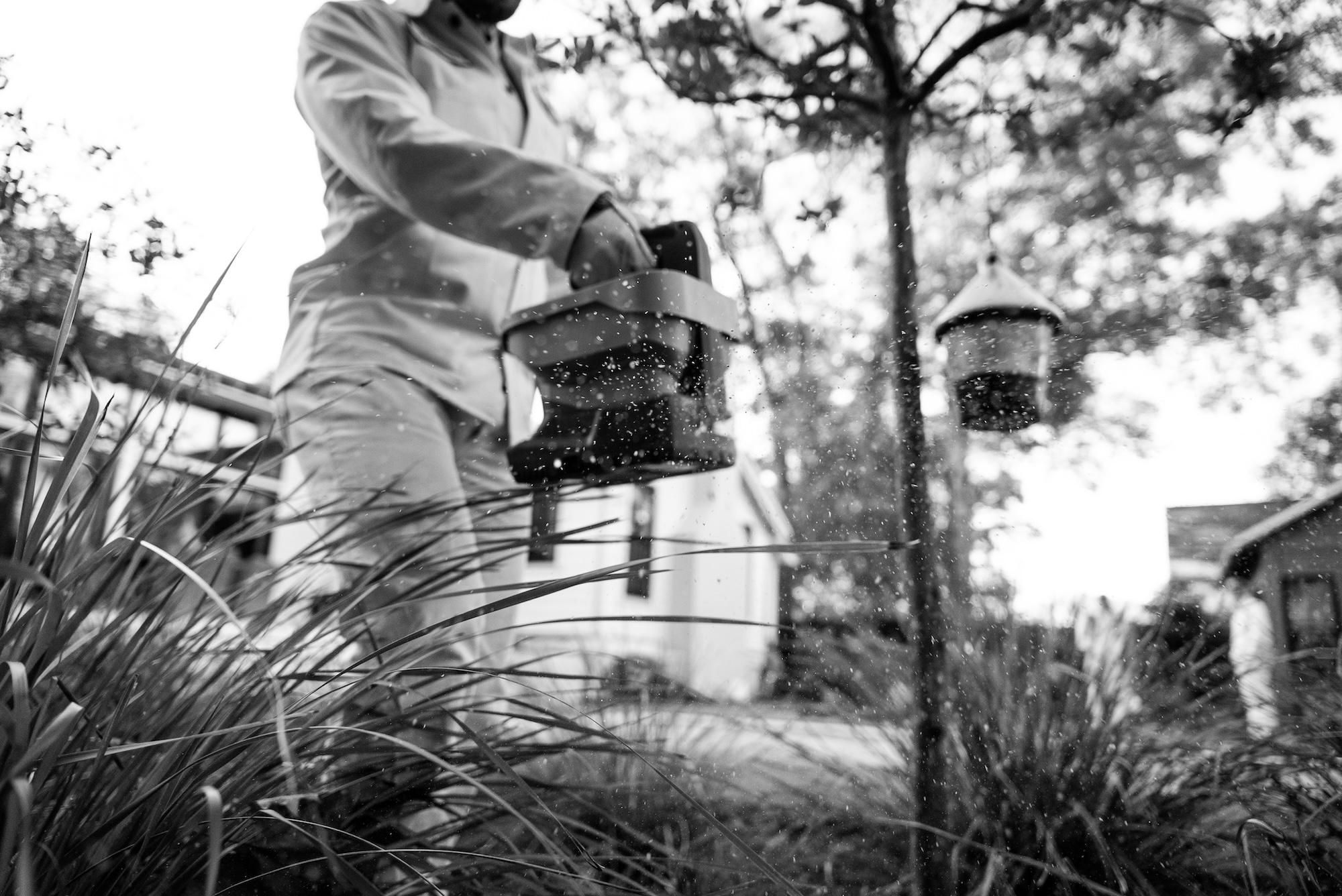
Effective ant control requires non-repellent products — treatments that ants can't detect, walk through unknowingly, and carry back to the colony where they eliminate it at the source. This is the fundamental difference between professional treatment and what you buy at the hardware store.
What We Actually Do
Ant control in a Charleston home starts outside, not inside.
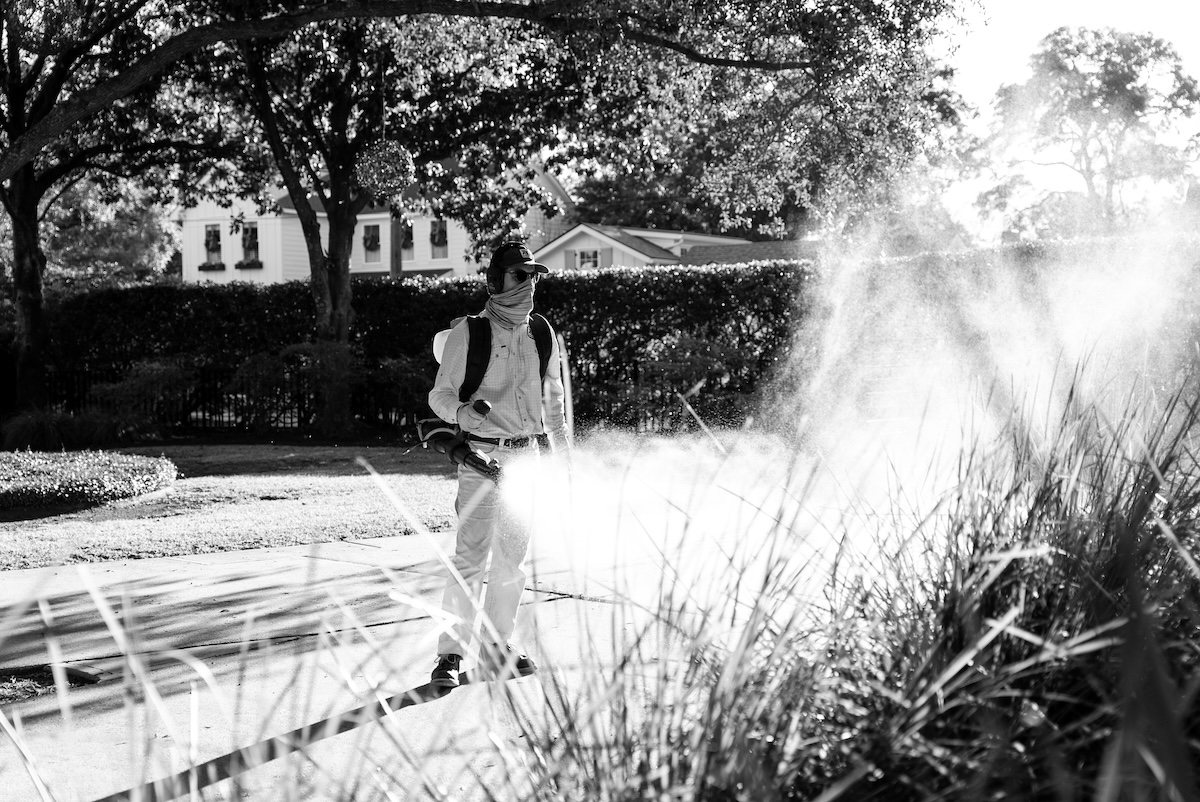
We identify the ant species first because it determines everything — the product, the placement, the method. Then we treat the exterior perimeter of your home, targeting the mulch beds, foundation edges, and moisture areas where ants nest and travel. We address entry points around doors, windows, pipes, and utility penetrations.
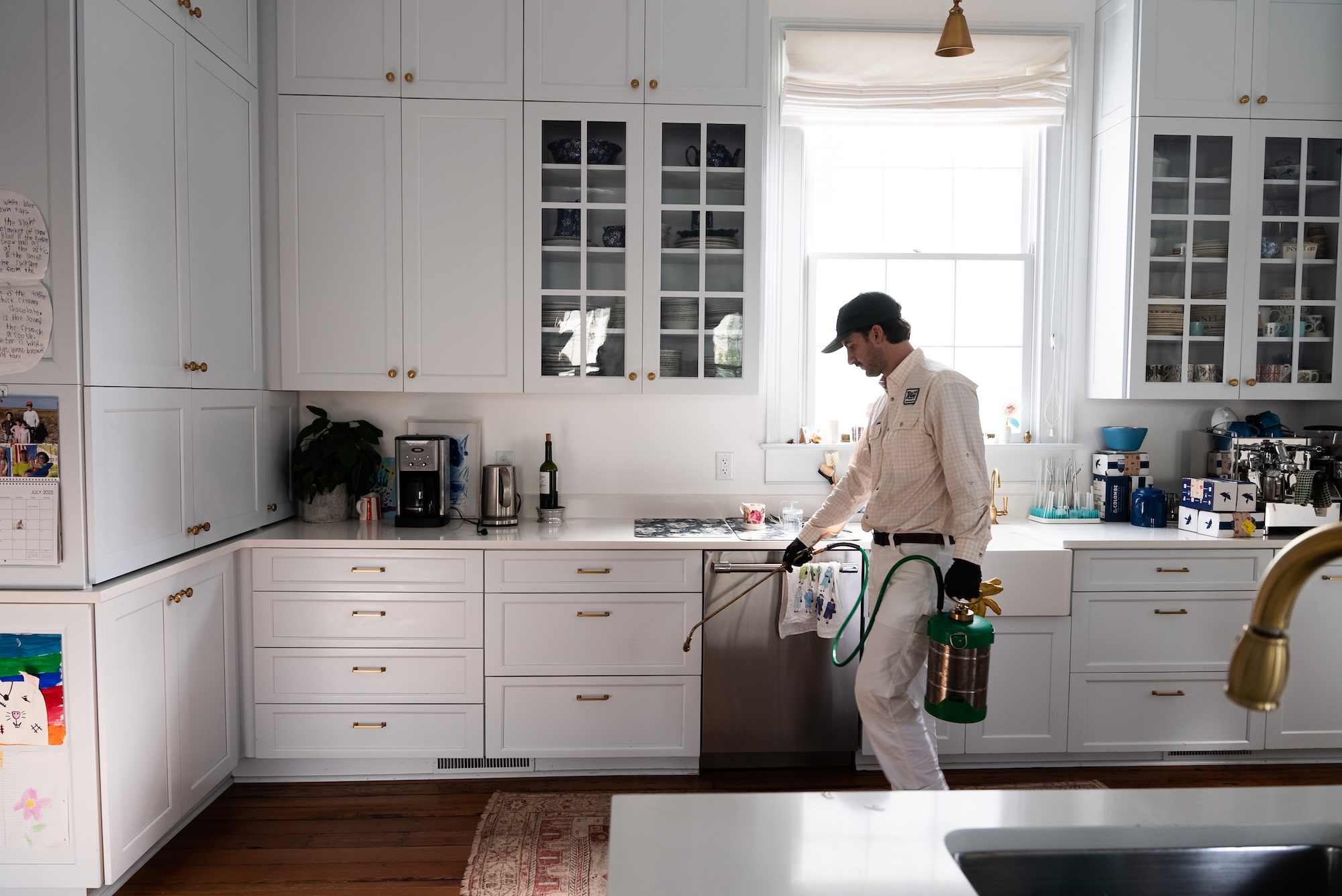
If there's interior activity, we treat targeted areas — under appliances, around plumbing, along baseboards — using products that ants can't detect and will carry back to the colony.
The result isn't instant. Effective ant control takes a few days as the treatment works through the colony. But it's thorough, and it addresses the problem at the source rather than just killing foragers on the surface.
What Homeowners Can Do Right Now
Professional service works significantly better when paired with a few simple habits:
Clean up food and moisture immediately. Wipe down counters after cooking, fix any dripping faucets, and don't leave pet food out overnight. Scout ants are looking for these signals.
Seal gaps around pipes and appliances. The gap behind your dishwasher, around the pipe under your sink, and along your baseboard where it meets the floor are common entry points. A tube of caulk addresses these quickly.
Keep mulch away from your foundation. Mulch stays moist and provides ideal nesting conditions for ants. Keep it pulled back at least 6 inches from your home's exterior.
Don't squish scout ants. It sounds counterintuitive, but crushing a scout ant releases a pheromone that can actually signal the colony to increase foraging activity. Instead, note where you're seeing them and where they're coming from — that information helps us treat more effectively.
Don't use repellent sprays. Especially with Argentine ants, this makes things worse. Call us instead.
The Bottom Line
Ants in your Charleston kitchen this summer aren't a sign your home is dirty or poorly maintained. They're a sign that your home is warm, dry, and smells like food — which is every home in the Lowcountry in July. The difference between homes that struggle with ants all summer and homes that don't usually comes down to one thing: a consistent perimeter treatment that addresses the colony before it makes it inside.
If you're seeing ants in your kitchen, explore our pest control services or learn more about how we're keeping kitchens ant-free across Mount Pleasant and the greater Charleston area.
Reif Environmental serves James Island, Mount Pleasant, Johns Island, West Ashley, Downtown Charleston, Folly Beach, Sullivan's Island, Kiawah, Seabrook, Summerville, and North Charleston.