The Real Reason Mosquito Season Feels Endless in Charleston (And What We Do About It)
Mosquito season in the Lowcountry isn't just bad luck. Charleston's coastal geography, summer heat, and dense vegetation create near-perfect breeding conditions that make mosquitoes a structural problem, not a seasonal one. After running mosquito service routes across the Charleston area all summer, here's what we've learned — and the two-step approach that actually keeps populations under control.

If you've spent any time outside in Charleston this summer, you already know.
You step onto the back porch around 6pm and within 30 seconds you're swatting. You light the citronella candles. You spray on the repellent. You go back inside anyway.
It's not your imagination — and it's not just bad luck. Mosquito season in the Lowcountry is genuinely relentless, and there are real reasons why. After running mosquito service routes across James Island, Mount Pleasant, Johns Island, West Ashley, and surrounding communities all summer, here's what we've learned.
Charleston's Geography Is a Mosquito's Dream
Most cities deal with mosquitoes seasonally. Charleston deals with them structurally.
The Lowcountry sits on a coastal plain surrounded by tidal marshes, drainage ditches, and brackish waterways. That geography doesn't just look beautiful — it creates near-perfect mosquito breeding conditions that simply don't exist in most other parts of the country.
Add in Charleston's summer heat (regularly 90°F+ with humidity to match), frequent afternoon thunderstorms that leave standing water everywhere, and dense tree canopy that stays moist and shaded long after the rain stops — and you have an environment where mosquito populations don't just survive, they explode.
This is the baseline. It's not a bad year. It's just the Lowcountry in July.
Where Mosquitoes Actually Live (It's Not Where You Think)
Most people think mosquitoes live in open water — ponds, puddles, standing birdbaths. And yes, those are breeding sites. But the mosquitoes that are actually biting you while you eat dinner on the porch aren't flying in from the marsh.
They hatched in your yard.
Mosquitoes lay eggs in as little as a bottle cap of standing water. Clogged gutters. The saucer under a potted plant. A tarp that collected rainwater. A low spot in the lawn that stays damp. Any of these can produce hundreds of mosquitoes within a week.
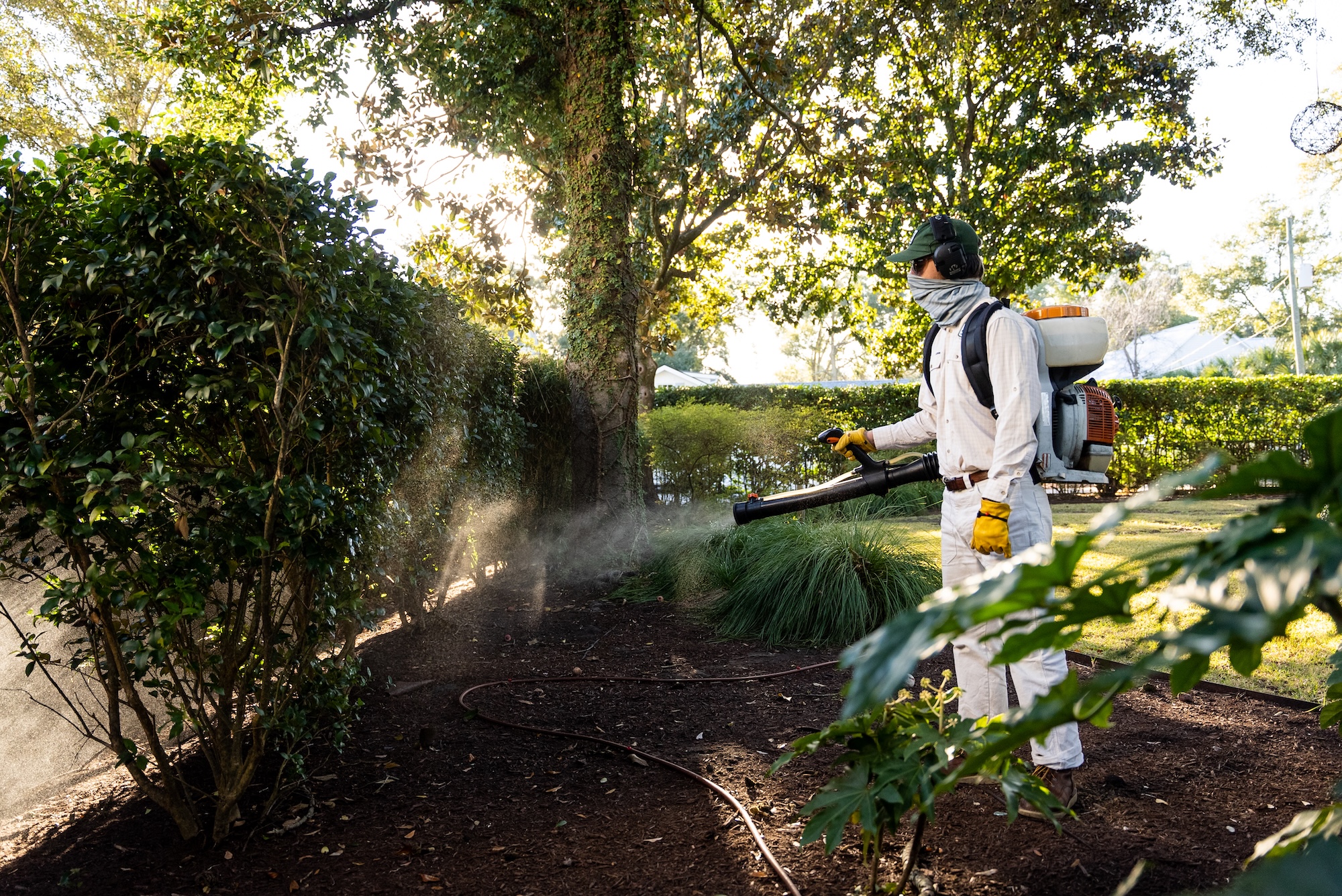
And during the day, adult mosquitoes rest in dense, shaded vegetation — the underside of shrubs, thick ground cover, bamboo, ornamental grasses. They're not flying around waiting to bite you. They're hiding, resting, and waiting for dusk.
That's why spraying open lawn does almost nothing. The mosquitoes aren't there.
Why DIY Treatments Don't Last
Backyard foggers and spray-on repellents work in the moment. But they wear off within 24 to 48 hours, don't address breeding sites at all, and miss the resting areas where mosquitoes spend most of their time.
You're treating the symptom, not the source.
A real mosquito reduction program has to do both — kill the adults present now AND interrupt the breeding cycle so the next generation never develops. Miss either piece and you're back to square one within a week.
How We Actually Tackle It
Our mosquito service alternates between two approaches each month, specifically because no single method is enough on its own.
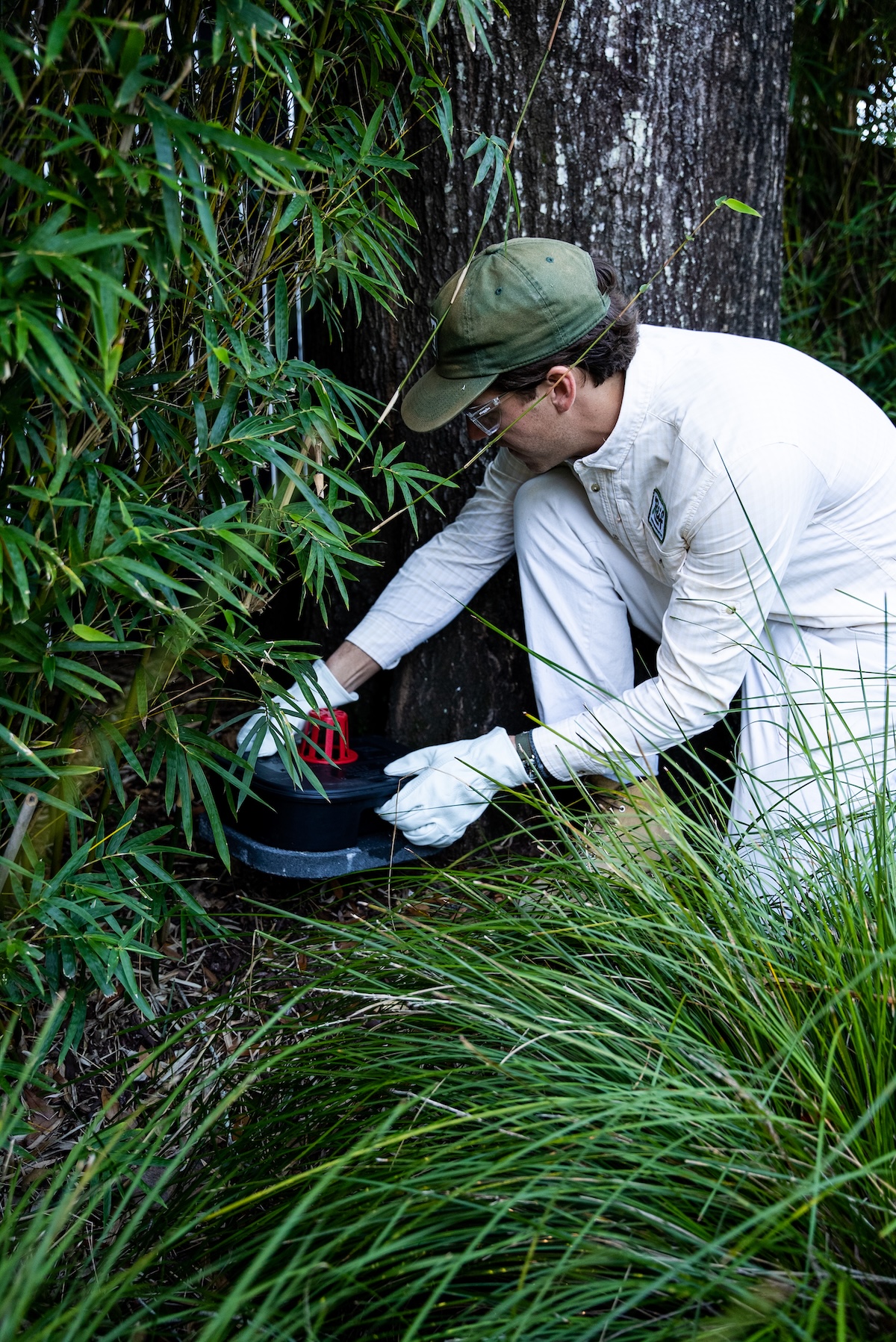
On odd months, we focus on larvae control — servicing bait stations placed in the shaded, moist areas where mosquitoes breed. These stations target the larvae before they ever develop into biting adults, reducing the overall population at the source.
On even months, we shift to targeted fogging of resting areas — dense shrubs, ground cover, tree canopies, and shaded borders — using a backpack fogger that reaches deep into vegetation where mosquitoes actually hide. The product we use for fogging is plant-derived and naturally sourced, meaning it's safe for kids, pets, and even pollinators like bees and butterflies. We're deliberate about this. In a community surrounded by marshland and natural ecosystems, we're not willing to trade a mosquito problem for a pollinator problem.
By rotating between the two, we maintain continuous pressure on the mosquito population throughout the entire season. It's not a one-time fix. It's a system.
What Homeowners Can Do Right Now
Professional service works significantly better when paired with a few simple habits:
Eliminate standing water weekly. Check plant saucers, tarps, gutters, kids' toys, and any low spots in the lawn. Mosquitoes can breed in water that's been sitting for as little as 5-7 days.
Trim dense vegetation. Overgrown shrubs, thick ground cover, and bamboo are prime resting areas. Keeping vegetation trimmed and open increases airflow and reduces shaded hiding spots.
Run outdoor fans. Mosquitoes are weak fliers. A simple box fan on the porch makes it significantly harder for them to land on you.
Start early. Mosquito populations build through spring and peak in July and August. Starting service in March — before the surge — is dramatically more effective than trying to catch up mid-summer.
The Honest Truth About Mosquito Control in the Lowcountry
You will never completely eliminate mosquitoes in Charleston. The geography won't allow it. But you can reduce them significantly — enough to actually enjoy your backyard, host a dinner outside, let your kids play at dusk without running inside.
That's what our service is designed to do. Not a miracle. Just meaningful, consistent relief in a place that genuinely makes mosquito control hard.
If you're ready to take back your backyard this summer, learn more about our Mosquito Service or see how we're helping families across James Island and the greater Charleston area.
Reif Environmental serves James Island, Mount Pleasant, Johns Island, West Ashley, Downtown Charleston, Folly Beach, Sullivan's Island, Kiawah, Seabrook, Summerville, and North Charleston.