Why Yellow Jackets Get Aggressive in Charleston Every August (And What to Do About It)
Getting stung more than usual this month? Here's why yellow jacket colonies peak in August — and how to spot a nest before someone gets hurt.
Why Yellow Jackets Get Aggressive in Charleston Every August
Yellow jacket colonies reach their largest size and most aggressive behavior in Charleston during August, as colonies shift from raising larvae to aggressively foraging for food to sustain the queen before fall. If you've been stung more this month than all summer combined, it's not bad luck — it's the calendar. Here's what's actually happening, and what to do about it.
Why Are Yellow Jackets So Aggressive in August?
A yellow jacket colony that started with a single queen in spring can grow to several thousand workers by August — and that peak size is exactly when their behavior changes. Early in the season, worker yellow jackets spend most of their time hunting insects and caterpillars to feed developing larvae back at the nest. That work keeps them relatively focused and less interested in you.
By August, the colony has largely stopped producing new workers and started raising the next generation of queens instead. With fewer larvae to feed, foraging workers shift from hunting protein to chasing sugar — which means your soda can, the trash bin, fallen fruit in the yard, and anything sweet on the patio table suddenly becomes a target. At the same time, colony numbers are at their highest point of the year, so there are simply more wasps competing for the same food sources.
That combination — peak population plus a shift toward aggressive foraging — is why late summer feels like open season on backyard cookouts.
Why Does It Feel Worse This Time of Year?
Charleston homeowners notice three things spike in August: wasps hovering around trash and drinks, more visible nest activity in yards and eaves, and stings that seem to come out of nowhere. Unlike a lot of stinging insects that mostly defend their nest and otherwise leave you alone, yellow jackets are also aggressive foragers — meaning they'll investigate you even when you're nowhere near a nest, simply because you smell like food.
It's also the point in the season when nests are large enough to be genuinely dangerous if disturbed. A nest that was a handful of wasps in June can be a few thousand strong by August, and yellow jackets release an alarm pheromone when the colony is threatened — which is why one sting can trigger several more in quick succession as nearby workers join the defense.
How to Spot a Nest Before Someone Gets Stung
Yellow jackets in the Charleston area build both underground nests and nests hidden in structures, so knowing where to look matters. Ground nests are the most common — look for a steady stream of wasps flying in and out of a single hole in mulch beds, at the base of shrubs, under sheds, or along foundation edges. Because the entrance is small and often hidden by ground cover, these nests are easy to disturb accidentally with a lawnmower or while gardening.
Aerial nests show up in eaves, soffits, wall voids, and dense shrubs — often built inside a void where they're not visible until activity around a small gap gives it away. If you notice repeated wasp traffic concentrated around one specific spot on your home rather than wasps scattered generally around the yard, that's usually a sign there's a nest close by.
Why DIY Removal Is Riskier With Yellow Jackets
Yellow jackets defend the entire colony when threatened, not just the individual insect — which makes disturbed nests far more dangerous than most homeowners expect. A can of store-bought wasp spray might kill the individuals it directly hits, but it rarely reaches deep enough into a ground nest or wall void to eliminate the colony, and a disturbed nest can send dozens of defenders after whoever triggered it.
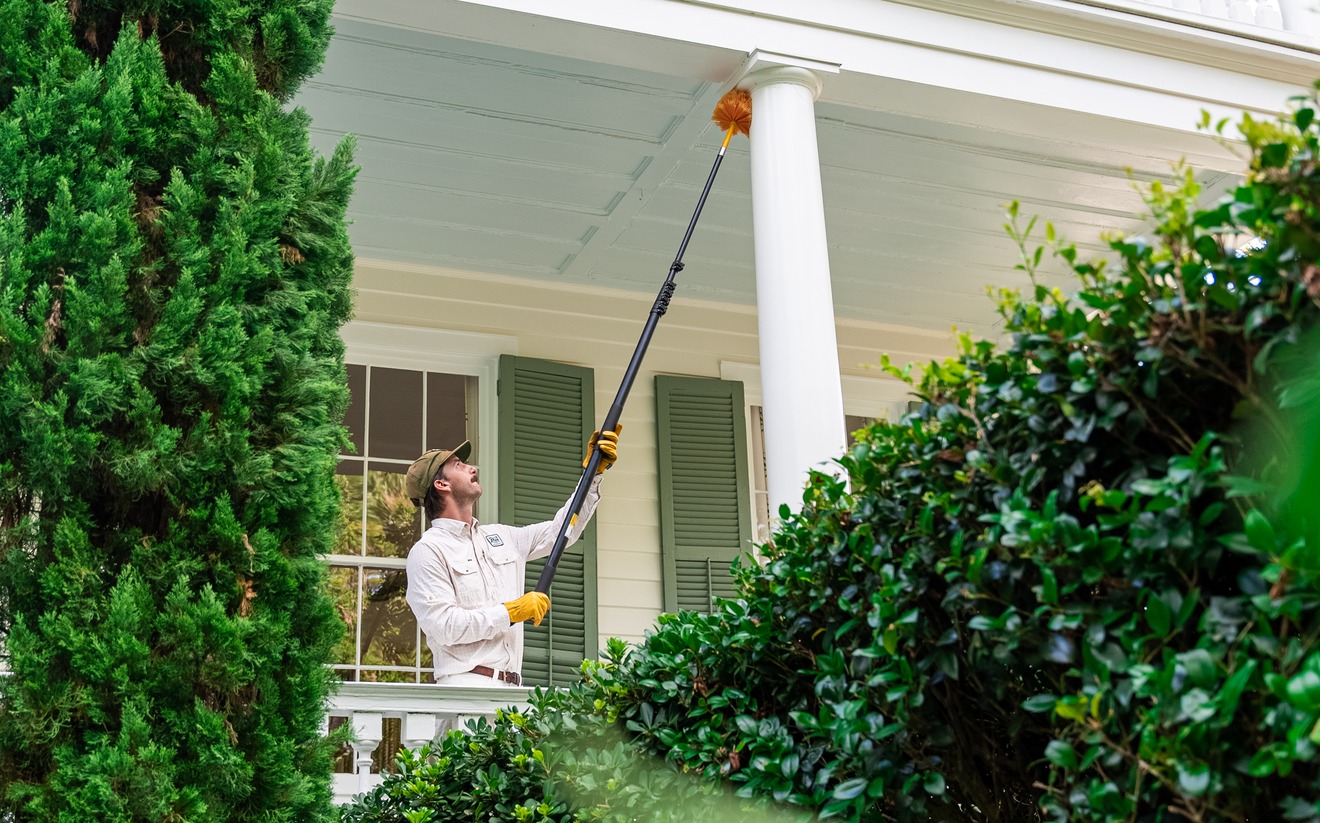
This is different from the solitary wasps and spider webs we sweep down on every routine service visit — those pests defend themselves individually and don't swarm. Yellow jacket colonies require identifying the full nest location, using the right equipment, and treating it in a way that addresses the entire colony at once, not just the wasps visible at the entrance.
What We Do Differently
Our approach starts with correctly identifying the nest type and location, since ground nests, aerial nests, and wall-void nests each require a different treatment method to fully eliminate the colony. Rather than just knocking down what's visible, we treat the nest directly so the colony doesn't rebuild or relocate somewhere harder to reach on your property. This is on top of the routine web and nest sweeping we already do on every quarterly visit — but an active, aggressive yellow jacket colony in August needs more than a sweep. It needs direct treatment.
The Bottom Line
Yellow jacket aggression in Charleston is a short, predictable seasonal window — but it's also the point in the year when nests are largest and most dangerous to disturb on your own. If you're seeing more wasp activity around your yard or noticing a specific spot on your property that keeps drawing traffic, it's worth having it identified and treated before nests grow any larger heading into fall. Learn more about our pest control services or see how we're protecting outdoor spaces across the greater Charleston area.
Reif Environmental serves James Island, Mount Pleasant, Johns Island, West Ashley, Downtown Charleston, Folly Beach, Sullivan's Island, Kiawah, Seabrook, Summerville, and North Charleston.